Epic Fail Crypto
After 15 years in crypto, we cannot hide that the initial To The Moon 🚀 expectations have been broken and that nothing of the promised was delivered.
So, what happened?
At the detail level we can argue a plethora of mistakes:

Fungible Standard Maturity Model
Instead, technology evolves in an iterative layered model. Every layer, specializes in solving an specific problem, is standardized, hiding the complexity of lower layers and provides services and good practices to upper layers. As a result, a Maturity Model is produced. Fungible Standard understands this process and proposes a Maturity Model for Fungible Tokens.
Application Layer
Specialization Layer
Interoperability Layer
Immutability Layer
Principles Layer
Standardization Layer
Ecosystems Layer
Principles Layer
Layer 1: Ecosystems Layer (2009-2015)
Defining the criteria and selecting the pieces that comply with the value capture principles will provide better adoption in an already saturated ecosystem.
DLT Networks
With hundreds of DLT networks with different consensus protocols, gas fees or ecosystems is necessary to understand which ones comply with value-based cryptocommodities.

Wallets
Despite there are more than 1 hundred of wallets in offer in the crypto market, there is not a simple $20 HW wallet, as a Garage Door Opener, to pay in real markets and this is preventing massification.

Exchanges
When issuing your value-based cryptocommodities it is necessary to understand what CEX, HEX, DEX, FEX, Liquidity Aggregators comply with the Trading, Operations and Distribution.
Layer 2: Token Standardization Layer (2015-2025)
In order to allow Fungible Tokens communicate with disparated system, it was soon required to define a common interface. This caused the advent of ERC-20 interface in 2015, adopted by Ethereum in 2017.
1interface IERC20 {2 event Transfer(address indexed from, address indexed to, uint256 value);3 event Approval(address indexed owner, address indexed spender, uint256 value);4 function totalSupply() external view returns (uint256);5 function balanceOf(address account) external view returns (uint256);6 function transfer(address to, uint256 value) external returns (bool);7 function allowance(address owner, address spender) external view returns (uint256);8 function approve(address spender, uint256 value) external returns (bool);9 function transferFrom(address from, address to, uint256 value) external returns (bool);10}Complementary Standards
Following the ERC-20 Standard, a number of complementary standards specialized in specific technical features, as:
- Lifecycle Management: as Pause,
- Supply Management: as Mint, Burn,
- Transfer Automation: as Transfer and Call
- Security: as Owner transfer, Owner Renounce,
- Permit Features: as Permit
- Upgradeability: as Diamond Standard
Below are the categories of complementary ERC-20 Standards
Centralized Fungibles (2025+)
At current state of arts, a few fungible types have been identified and implemented. However, despite mainstream expectations and marketing slogans, decentralization remains a challenge.
Fidelization
Distributed by the issuer to grant customers consideration. Backed by especulative value. Can be decentralized.
Memecoin
Representing a character or an idea, motivation or proposal. Backed by especulative value. Can be decentralized.
RepuToken
Representing the reputation of the issuer, a person, company or institution. Backed by especulative value. Can be decentralized.
Utility Token
Typically fueling an ecosystem capturing the value of a key utility. Can be decentralized.
Security Token
Pegged to the price of some kind of security, either manually or by oracles. Produces a yield to the holder. Can NOT be decentralized.
Stablecoin
Pegged to the price of some financial asset, as currency, commodity, cryptocurrency or algorithm. Can NOT be decentralized.
Crommodity
Works as medium of exchange on its own market by capturing the price of the asset. Must be decentralized. Unfeasible in Layer 2.

The Identity Crisis
In his 16th aniversary, blockchain industry looks immersed on his own adolescence crisis. It gets proposals from all directions and is confused about what it wants to become.
With several hundreds of blockchain networks, more than 1700 exchanges, 200 wallets and more thn 1300 ERC standards and the lack of role models and references the industry looks lost into the confusion which is the perfect climate for dishonest behaviour.
Industry speaks about decentralizations, interoperability and its own technological idioms with poor usability and users are messed up with technological concepts instead of perceived value.
Scammers and fake issuers take advantage of the uncertainties. Distrust spreads on the users community. Dissapointment takes over the industry.
Layer 3: Principles Layer
Instead of tecnical concepts, users want clear contracts, outcomes and compromises delivered. Is time to turn the arguments around to users point of view.

Principles to the Rescue
As Asimov's Laws on Robotics, or Archimedes' Law of the Lever, no system can growth without a clear references as lingua franca for communication between agents and stakeholders.
The Principles for Quality Fungible Tokens make up an Abstraction Layer, guaranteeing that tokens deliver the Foundational Principles of Blockchain. Further on, these principles will spawn a checklist of requirements.
... 2 required principles must guarantee token consistency... 2 required principles guarantee market discipline...
1. Capture Value Faithfully
Tokens are not ponzi schemas. Whether captured value is speculative, reputational, utility, a price or intrinsinc (Layer 6), value must be captured into the token in an faithfull way. At any moment, token's price, must reflect market valuation of captured value.
2. Protect Holders Value
Token operations cannot compromise holders piece of captured value neither by manipulation of the issuer (Value Integrity) nor by interference of external agents (Token Security). The Platform must minimise the risk of Value disruption and provide recovery mechanisms.
3. Friendly Access to Value
Token issuer should make value operations and services friendly, which includes multichain availability, chain abstraction, usage of standards
4. Operational Transparency
Token Holders must be Informed beforehand on all operations performed to the token affecting them. Investor and users need fluid and trustfull information. This includes a requirement of Transparency. We also must include configurable reports with enabled interoperability formats between servers.
Layer 4: Immutability Layer
Principles are nothing if they are not etched in stone. Immutability Layer provides a permanent mechanism to host the Token Features that can be assembled in Fungible Token's Contract.
Composition of Immutable Master Contracts
Contracts are created to be enforced. Both parties benefit from clear principles written in stone. Diamond Standard (ERC-2535) provides the technical infrastructure to have Master Agreements on chain in a immutable manner. These Master Agreements are replicated along all tht nodes of the blockchain providing a foundation to have composable contract features.
Compose Library, built-on top of Diamond Standard, brings the assembly of immutable contacts by composition of Master Agreements features.
Both working together provide a technical foundation to enforce, out of the box, the design principles described in Layer 3.
Fungible Standard relies on immutable technologies to guarantee the agreed contracts in compliance with the compromised principles.
Layer 5: Interoperability Layer
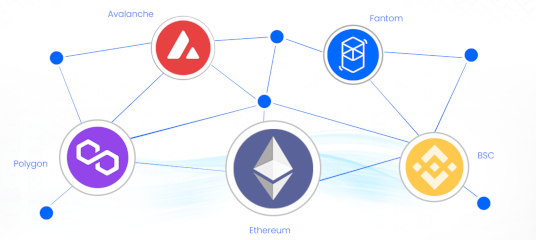
The cornerstone for blockchain adoption: blockchains were not designed to communicate which each other, creating a liquidity fragmentation problem and destroying usability. .
Interchain Communication
With hundreds of DLT networks with different consensus protocols, gas fees or ecosystems is necessary to understand which ones comply with value-based cryptocommodities.

Interoperability Agents
When issuing your value-based cryptocommodities it is necessary to understand what CEX, HEX, DEX, FEX, Liquidity Aggregators comply with the Trading, Operations and Distribution.

Interoperability Patterns
Despite there are more than 1 hundred of wallets in offer in the crypto market, there is not a simple $20 HW wallet, as a Garage Door Opener, to pay in real markets and this is preventing massification.

Layer 6: Specialization Layer
Once we have all Components in place we can focus on Specialization on the different flavours of Captured Value. Fungible Standard defines delivers out of the box fungible tokens ready to capture different flavours of value.

Blockchain Registry
Existing tokenization patterns hold specialized features and are suitable for different applications.
By different reasons, all the existing tokens, fall short in delivering the funtions of a Medium of Exchange and this is preventing mainstream adoption and real world use cases.
CryptoCommodity combines the features of existing tokens aiming to become the first (crypto)currency representing Sound Money ever. The specifications have been written decades or centuries ago and we are in the time to apply this knowledge.
Join us on the mission to design how the Digital Sound Money should look like.
Any Fungible Token, with ability form its own price without external interaction, can have a decentralized version.
Fidelization
Distributed by the issuer to grant customers consideration. Backed by especulative value. Can be decentralized.
Memecoin
Representing a character or an idea, motivation or proposal. Backed by especulative value. Can be decentralized.
RepuToken
Representing the reputation of the issuer, a person, company or institution. Backed by especulative value. Can be decentralized.
Utility Token
Typically fueling an ecosystem capturing the value of a key utility. Can be decentralized.
Security Token
Pegged to the price of some kind of security, either manually or by oracles. Produces a yield to the holder. Can NOT be decentralized.
Stablecoin
Pegged to the price of some financial asset, as currency, commodity, cryptocurrency or algorithm. Can NOT be decentralized.
Crommodity
Works as medium of exchange on its own market by capturing the price of the asset. Must be decentralized. Unfeasible in Layer 2.
Layer 7: Application Layer
Only when fungible tokens are specialized and reliable they can enter in the Application Layer. Fungible Standard aims to build fungible tokens that can cover the full lifecycle and benefit stakeholders.

Configuration
Do not tokenize but configure. Most of patterns have already been discovered.
Learn More
Funding
Get funds from investors to execute your project and return a profit to the investors and value for society.
Learn More
Negotiation
Use the price formation mechanism of your underlying market to value your token.
Learn More
Distribution
Choose the best techniques to distribute your token as the barebone for your marketplapce.
Learn More
DeFi Services
Contribute to financial inclusion by delivering the value of your token back to the society.
Learn More
Crowdsolving
Apply the framework to other tokens to enable citizens funding and solving their own problems.
Learn More